Tonight, a conversation with award-winning filmmaker, Oliver Stone. The DVD and Blu-ray release of his film, “Snowden”, comes out December 27 and there’s also a new book out about his work. It’s called “The Oliver Stone Experience”. We’ll talk about that and much more tonight with filmmaker, Oliver Stone.
Tavis: Pleased to welcome award-winning director, Oliver Stone, back to this program. His latest project is called “Snowden”, which releases December 27 on DVD and on Blu-ray.
There is also a wonderful and very heavy coffee table book called “The Oliver Stone Experience”, which delves into his film work over the years. We’ll get to this later in the program. Before we start our conversation, though, with Oliver Stone, first a clip from “Snowden”.
[Clip]
Tavis: You buy that? You believe that? That secrecy is security and security is victory?
Oliver Stone: No, Tavis. He buys it and that is an argument that the national security people always make, that we are running an empire basically since World War II that has gotten so big and it’s so vast. And we have to know everything in order to preserve it and to maintain it. That’s basically the argument. We have to know everything.
Tavis: Yeah. What do you make of that argument?
Stone: Well, it stems from the film. “Snowden” is–you know, I got into this issue when, you remember, he broke the news in June of 2013. That was pretty stunning stuff.
It was evidence finally that the national security agency had gone way beyond its mandate and it was collecting information not just on American citizens, but on everybody in the world, on corporations, on banks, on governments, on people that it was interested in. It’s a vast operation beyond any comprehension.
Most people were really shocked. I was. Then I got into it with Ed. I went to Moscow and I met him, made many trips. And he told us more and more. He didn’t warm up right away. He was very cautious and he told us more over these nine visits over about a year.
And what happens is that, you see, he and I both agree. I mean, a lot of people agree that, if you really are fighting terrorism which was the original excuse given for this, you have to have selected targeting, which is to concentrate on the terrorist and his people around him, and they’re all findable.
Usually, we have a pretty good trace on them and you use human intelligence, you use signals intelligence. You know, we tracked a lot of the phone numbers of the people at 9/11. We had that before.
This is all true, but we have to really concentrate on that amount of targeting and focus on that and have the agencies communicate with each other. The FBI, the NSA, the CIA don’t communicate. And even though we add more intelligence agencies, the communication is not really working that well.
So here we are in this situation where we’re getting so much information that, in a sense, it’s so vast for our computers—although we build bigger and bigger computers, you know, I’m hearing stories now about new types of computers, you know, quantum computers and stuff like this—it’s getting out of hand. I mean, no one knows what’s going on in the world.
And the movie that we just picked is not only about surveillance. It’s also about cyberterrorism, cyberwarfare which is a new form of warfare which, I mean, Americans don’t know anything about, as well as drone warfare which comes from data mining.
Tavis: I don’t need to ask you, but I’m going somewhere with this, so stay with me. I don’t need to ask you whether you think that Edward Snowden is a traitor or a patriot. I think your views on that are pretty clear. But there are people whose views on Edward Snowden have changed over the years and there are other persons whose views have not changed. I want to talk about a couple of different people in those various categories and get your take on it.
Let me start with former Attorney General Eric Holder who was once a staunch critic of Edward Snowden and has said on the record since then that he does think that Snowden provided a public service. That’s his phrase, that he did provide a public service. You think it was a public service?
Stone: I do, I do. You know, Mr. Snowden, he always gave his motivations. He said, “I’m giving this information responsibly to journalists who’ve reported on this and it’s up to them to propagate what they think is in the interests of the American people.”
He always said that. He never veered from that story. He didn’t make any money off of this. I don’t know of any traitor who gives information away for free. He’s maintained that from the beginning, from the first time he met them in June until now. So the profit motive is out.
People who’ve actually seen this movie, actually seen it, have said, well, I’ve changed my mind on Snowden and I really think he should be pardoned or he should be brought back to the United States and given a minimal sentence for breaking the law. He always said, “I’m breaking this law in the service of a higher law” which is what Martin Luther King said.
Tavis: Absolutely.
Stone: You have to sometimes ruffle the…
Tavis: An unjust law is no law at all, yeah.
Stone: Not only that, I mean, it was just–he was shocked because he’s a bit of a boy scout in that way. He was very pure. He was a Libertarian, Conservative, Army family background. After he’d been in the NSA for a few years, he was surprised at just the crossing of barriers into personal lives every day that we were doing this and not questioning it.
It’s against the Constitution. You have to have reasonable cause to survey somebody, reasonable cause. There was no reasonable cause given and, especially when you take on the whole population of the United States, we’re not terrorists.
Tavis: I want to come back to Snowden’s politics in just a second because it’s a fascinating part of the journey that you took. But I want to stick with this point I made a moment ago of quoting a couple of other people who have their own thoughts about Edward Snowden.
So I mentioned Eric Holder and how he started to change on his view of Edward Snowden, it would appear, from the quote that I referenced a moment ago.
Now Congressman Mike Pompeo who Donald Trump, as you know, has picked to be the head of the CIA–I wrote this down. I wanted to make sure I quoted him correctly–has referred to Edward Snowden–this is a quote–“the traitor, Edward Snowden–that’s how he refers to him–“as the traitor, Edward Snowden”.
This is the guy who would run the CIA if approved by the Senate, nominated by Mr. Trump, and he has called for Edward Snowden to be executed. So what do you make of the guy that may run the CIA who has heretofore at least called for Edward Snowden, the traitor, to be executed?
Stone: Well, you’re jumping way ahead of me here. The movie was based on the idea that you would see it, you know, that this Congressman might see it, but they don’t even give it any thought. They have an ideological stance on it and you’re saying he’s preset, he should be executed. Trump said the same thing at one point a few years ago.
You know, life is much more complicated than that and you should be able to change your views as you go through life. This fellow presumably will get appointed to the CIA. He’s also advocating Guantanamo opening again, more prisoners, and also torture, he seems to be fine with torture.
So it’s all going in one direction which is pretty rigid. It’s another America. It’s going back to the dark side of Mr. Cheney, Dick Cheney.
Tavis: President Obama was asked just on Friday about Edward Snowden, as you probably already know. Certainly Oliver Stone knows this.
Stone: No, I didn’t know.
Tavis: There is a big movement afoot and I suspect it’s going to grow in the coming weeks to press President Obama to pardon Edward Snowden before he leaves office–don’t laugh–but there’s going to be a huge press for him to do that before he leaves office.
President Obama was asked about this on Friday and this is a direct quote. “I can’t pardon somebody who hasn’t gone before a court and presented themselves, so that’s not something I would comment on at this point.” That’s President Obama on Friday when asked about whether he would pardon Edward Snowden.
I guess the question is whether you think there is any chance that Barack Obama, before he leaves the White House, would pardon Edward Snowden?
Stone: I wish he would or at least pre-pardon him, you know. I mean, make the condition such that he could be pardoned. No, it’d be the merciful thing to do and a graceful thing for him. I mean, he’s done many good things, but he hasn’t changed the system, the surveillance system at all. We’ve maintained a war state. We’re still very much in this kind of neoconservative lock that we fell into with George Bush.
So I have not seen that sense of pardon in him. He’s a tough man, Obama. I’ve lost a lot of respect. I thought the 2008 election was going to be a different movement. We’re gonna get rid of this madness that we’re living in and I’m very disappointed.
But I do think he’s done some good things. He hasn’t pressed the war in Syria to the place where it could have been suicidal for us as well as the Syrians. But Hillary Clinton, on the other hand, was of another nature and I think she was much tougher than Obama. Obama’s regarded as weak by Trump, so I worry about that.
You know, he wasn’t weak. If you have a powerful country such as we have, the most powerful in the world, you have to learn the power of soft power. You have to be forgiving and you can’t always seek enemies in the world. And this is what I fear is what’s going to happen in this new administration.
Tavis: How do you juxtapose his conservative politics with what he actually did? Because when you get a chance to see the film and read more about this guy, you see that his politics have been a bit conservative.
Stone: He was, yeah. He came from a southern family, two generations of FBI and military. He expressed those opinions when he was young and they’re in the movie, some of them. He was definitely pro Iraq War. He signed up for the military. He went in and he had a fragile body. He broke his legs, not a major break, but it was enough to keep him out.
Then he went over and volunteered for the CIA and he got in because he was quite good on a computer, very smart young man. And, basically, once he got in, he did his job very well except he was posted in Geneva, he was posted in Maryland, he was posted in Japan where he learned a lot about cyberterrorism, and then he moved on to Hawaii.
So he became more valuable as he went. One of the programs he built was Epic Shelter, which was used as a backup program which is very helpful to our global presence. But at the same time, he got more leeway.
He was a contractor essentially for the NSA at the end. And in Hawaii, he was able to access cyber offensive operations as well as defensive operations. He was covering China and Pakistan. But he knows a lot about cyberwarfare and a lot about drone warfare.
So what he was seeing, we were putting these offensive capabilities to use. We were hacking a lot of different places. As you may not remember, because it’s been sort of covered up in history, in 2009, Obama launched the Stuxnet virus against Iran. It was not discovered, I believe, until June or so of the following year, 2010.
But the deal was Obama was told by his “intelligence” people that this Stuxnet virus would not go beyond the borders of Iran and it would end where it ended, and would never be traced to the United States or Israel, who are its originators.
All three things turned out to be wrong. The virus did limited damage in Iran. They rebuilt those reactors and then, on top of that, it moved on into other countries and it could not be stopped for a while. And it was traced ultimately with a lot of research to the United States and Israel. So, I mean, we launched a warlike device which is a form of cyberwarfare in Iran in 2009, and we were doing it since 2006, I’m told.
There were earlier prototypes of Stuxnet, but they weren’t working. So in 2009, we essentially declared a new form of warfare and said here we are, and we thought we’d hide it, but we couldn’t. Other countries figured it out and they started to copy us.
In fact, Russia was soon behind us as well as China is very good at it. They’re smart. There’s a lot of independent hackers in the world that are very like Dr. No’s. They operate on their own and they can do enormous damage.
And as a result, we have all kinds of accusations about cyberwarfare going on. You heard a lot during the election campaign and many of them were silly and really out of hand, based on a sort of McCarthy-like fear of Russia or China.
So we’re in a mess right now. We need a cyber treaty between countries. We really have to sit down and renegotiate this thing because no one knows what–as Snowden says, surveillance is in freefall. I mean, no one knows what’s happening.
Tavis: Is Trump the right person to hit the reset button with Russia, since you referenced it? And what does that look like, do you think?
Stone: I really hope so, because if I had one beef, the major obstacle I had with Ms. Clinton, what I’m most scared of her, was this Russia situation. She was certainly pressing the Russia button making accusations about their cyberwarfare influencing the election and so forth and so on.
It was, I thought, outrageous claims and she should have not made them because she had a short rope to hang herself with…
Tavis: Or put the evidence out.
Stone: Yeah. There was no evidence either.
Tavis: Either/or, I mean, yeah.
Stone: In fact, a lot of people I know in the intelligence world—you can reference James Bamford. He’s written a lot about the National Security Agency–do think it’s probably an insider at the Democratic National Committee that was upset about the bad things that the officers were doing there.
They were trying to block Sanders. They were also selling ambassadorships. Four major officials resigned, you know. They were in some way implicit in this thing. One was a treasurer too.
So these were not mild accusations. These were serious accusations of malfeasance against officials. In other words, Ms. Clinton–well, going back to your original question on Trump. God, I hope so. You know, if there’s one good…
Tavis: The Trump-Putin relationship, friendship, whatever it is, doesn’t scare you?
Stone: No, it doesn’t scare me at all because–I mean, you’re asking me several questions here. No, Russia has not behaved aggressively towards the United States, believe it or not. It’s been the United States has been behaving very aggressively towards Russia for many years. This has been going on since we expanded NATO.
I don’t know if you remember, we had Gorbachev and Baker back in the 90s agreed that NATO would not expand eastward. Well, we’ve expanded to 13 countries. The first Clinton, then Bush, and then Obama, three presidents have expanded NATO to the east. There’s no reason to have that organization which is a defensive organization made after World War II still existing.
Tavis: Of course, the NATO argument, as you well know–I’m telling you stuff you already know–the NATO argument is that if we don’t expand particularly in that region of the world, then Putin runs amok.
Stone: But he hasn’t run amok. He has not run amok. Contrary, if you look at the figures, Russia’s been shrinking. They lost 21 million Russians in the 1990s. They were cut off from Russia. He has never expressed an interest in revitalizing that empire.
He is trying to keep his land mass complete and, if you look at the history of NATO which is taking it right to the border and looking at the hostility of his neighbors, looking at the abrogation in 2002, George Bush unilaterally revoked the ABM Treaty which we had signed with Russia.
Nixon and Brezhnev had signed it in 1972. That’s a big treaty, Anti-Ballistic Missile Treaty. He just said it’s off the table. So how can the United States be trusted if it breaks treaties like this? There’s been a lot of provocation to Russia in many ways.
And because the United States has been very concerned about the Eurasian-Chinese unification sort of, the idea of a big economic bloc emerging from Eurasia with China, China is the biggest economic power in the world besides us. But Russia has 10%. As Julian Assange has said, Russia has 10% of our domestic economy. They don’t have anything like it. They’re a smaller country.
They’re like a European country and they have a smaller military, but they have an effective military. They spend–what is it–20% of our spending on defense. There’s no evidence that Russia is trying to be something bigger than it is. They’re trying to stay alive is what I’m trying to say.
Tavis: Let me circle back to the film. There have been award-winning documentaries that come to mind about Edward Snowden. What were the challenges or the reasons, the rationale, for your interest in wanting to do it as a feature film?
Stone: Because when I heard the story from Snowden, it was inside information. No one had ever written or done anything about the National Security Agency with realism yet. There’s been very few books written on it. Bamford is one of them, James Bamford. But getting inside the dialog, the mindset, the sets, the way they look, this is crucial stuff. We went on Ed’s story and it is his story, his point of view.
There has been no convincing counter story from the National. Security Agency blaming him. He is what he is. He’s a smart young man who worked his way up through the NSA where he saw these horrible things going on and he said, “Let the public decide.”
Well, the public, unfortunately, did not understand it because that story broke in 2013 and there’s been no reaction. We’re still in this state we’re in. There were some mild reforms, yes, but essentially he brought–I think we have accepted the fact that the government is a global surveillance state.
We accept it, but we don’t understand the implications of that. And that’s what I’m trying to say to you. We have gathered more data than any single person. We’ve tapped everybody.
We have 22,000 miles up in space. We have satellites with antenna on them as big as the Eiffel Tower listening in on everything. So let’s say we have a coups recently in Brazil. Dilma Rousseff is removed from office. She was a leftist. She was the inheritor of Lula’s Workers’ Party.
I think it was an interesting story about why she was removed with what information. Because we were tapping Petrobras, which is the oil company of Brazil, as we were tapping a lot of the companies in Venezuela and so forth.
So we gave information maybe to the opposition party and they used that to bring all kinds of corruption charges against her. That’s a possibility. So you get a lot of pressure from this information. You can create coup d’états.
In Ukraine, there was a tremendous amount of help form the United States giving to the Ukrainian government which overthrew, again, its president who was democratically elected, overthrew him, instead of waiting for another election.
So if we keep promoting regime change, as Hillary Clinton has said, in these countries, Iraq, Libya, Syria, Ukraine, Turkey maybe–we tried a month or two ago. There was a big coups in Turkey that came very close–Brazil.
I’m saying these are significant changes in countries and we don’t have that right. It seems to me that we are using this power we have to listen in on everybody to promote the agenda we want.
Now what is the agenda? We’ve never argued this with the public. We’ve never debated what should the United States be doing? Should we be going around the world policing it? Demanding regime change when we don’t like a leader? This has happened since 1940s. It’s been going on.
We’ve had at least 100 changes of government that we’ve been involved in. Is this the right role for the U.S.? If we are really out for the United States, if we think about America first, to use Trump’s quote, which is important, I suppose, to say, look, let’s think about America.
What’s good for our health? It’s not changing regimes around the world because they’re not going to attack us. We’re pretty mighty, as it is. Let me finish my point. The idea is that, if we’re America first, let’s concentrate on America. Let’s build up the infrastructure here, and that’s one good thing he said.
Horrible things he said, but one good thing was let’s try to build up this American infrastructure. Let’s put the jobs here. Now he may not succeed, but we can sure build our bridges and roads and try to re-ignite our country economically. We know we’re sagging. We feel it.
Tavis: Whether Mike Pompeo, the future head of the CIA, or just an everyday American, sees this film, what is it about the film that will get them to reconsider their view of him if they take his…
Stone: You know, a film operates in a dramatic level. It’s…
Tavis: It’s powerful.
Stone: It’s human. It makes the human. You understand his story. The public didn’t understand Snowden in 2013. He thought he was–he’s a guy who gave away secrets. That makes him a bad guy in American parlance, but if you look into why he did it and what his life was like and look at his girlfriend, his relationship, he stayed human.
There was a part of him that was honest and pure, and I think we appeal to that in the American people and they will see why he did it. Many Americans would do the same thing if they could. The thing is, he had the courage at 29 years old.
At 29, imagine what you were like at 29. To walk away from the money, the job, the girlfriend? He had a beautiful life in Maryland, but he said no. My conscience is my guide and he lived up to it.
Tavis: This book is not by you, but it is about you. Tell me about “The Oliver Stone Experience”.
Stone: Well, I happen to like it [laugh]. Matt Seitz is a television critic for New York Magazine and he’s written about film extensively, loves film. He’s a man who’s not harshly judgmental, to put it that way, and he’s a very sweet man. He’s a good writer and he’s written about films and this is five years of his work.
He put it out and I gave him access to my files. He went through them. He used what he wanted. There was no negatives. I didn’t put any conditions on it, and this is what he wrote. Some of it, I agree with, some of it I don’t, but I think it’s interesting because, if you’re interested in any particular film I’ve done over those 20 films over, whatever, 25 years, it’s there.
Tavis: It’s called “The Oliver Stone Experience”, as he just said, analyzing his 20 films over this period. And the movie, “Snowden”, by Oliver Stone on Blu-ray and DVD December 27, if you want to have a copy in your personal library. Oliver Stone, always good to have you on the program, sir. Thanks for coming to see us.
Stone: My pleasure. That was fast.
Tavis: Always. You got so much to say, which is why we want you on.
Stone: Did we actually last for 24?
Tavis: We lasted. We got through it.
Stone: Really?
Tavis: Yes. That’s our show for tonight [laugh]. Thanks for watching… And, as always, keep the faith.



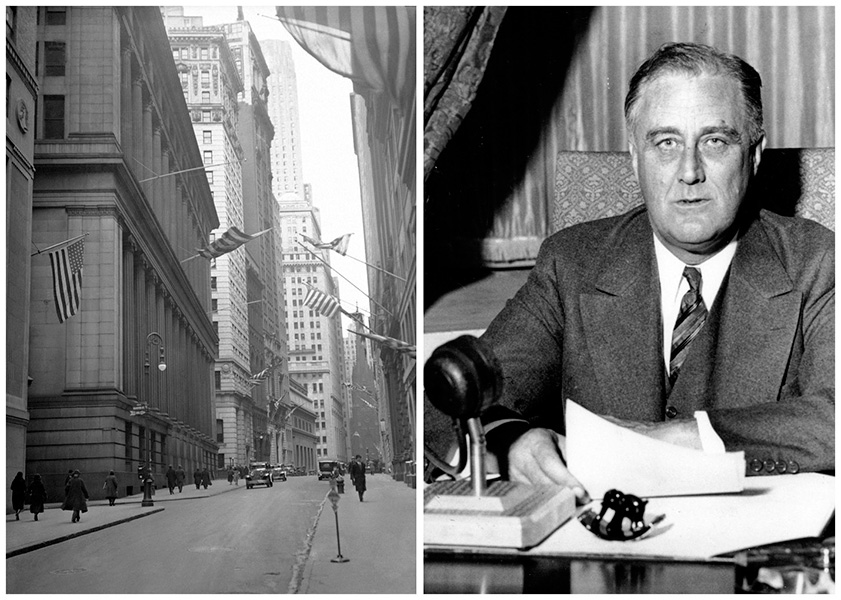
 The US presidency will continue according to the philosophic and ideological guidelines of the new and constitutionally elected chief executive, Donald Trump. There is no credible evidence to support rumors of other unelected chief executives to succeed President Trump, including any such persons positioned by foreign powers (e.g., China, Russia, etc.).
 All confirmed sources agree that the “RV/GCR” is theoretic, at best, and much more likely, a useful story-line for sustaining dinarland reader interest. A score of references can be given to support this position, however, the only “sources” available to dinarland “gurus” is the internal and circular rumor mill of their guru community.
 As is the case in previous eras, civilizations which transition through various stages of socioeconomic development invariably pass through the obvious periods of enlightenment and heightened culture only to bottom out when civilization reverses and a period of non-critical thinking and mob mentality controls the mechanisms of governance and power.


 During the CNN coverage of the election results last night political commentator Gloria Borger said that Trumps landslide victory “amounts to a new world order”. This comment is a peculiar phrase to use considering its loaded with reference and association with the conspiracy theory culture.


 Donald Trump has been calling the United Nations weak and incompetent while stating that NATO is obsolete. Both are suggestive of a changing world in which the role of the United States will be consolidated within a larger global governance framework. This framework will be structured around the multilateral mandates of a new monetary system and the objectives of the UN’s 2030 Agenda.

 In all areas American power is being challenged by the emerging powers. The alliance between Russia, China, Iran, Syria, and growing to include India, the Philippine’s, and soon Vietnam and other ASEAN members, will be the final catalyst to force the American establishment to back down and align with the larger multilateral mandates.
 With each passing day the desperation coming from the establishment media in the west is becoming more obvious. The constant hit pieces on Donald Trump roll from one to the other with little interruption. News is beginning to leak out that the orders to stop Trump from becoming president have been issued from the very top of the American establishment.




“At the end of 2013 Vietnam executed two of the top bankers in the country for corruption and crimes against the people.”
Coming to a country near you.
Not soon enough in Canada to avoid a bankrupt nation I’m afraid.
Very informative article. Please could you explain what you mean by ‘inflation dumping ground’ – excuse my ignorance. Also can you direct me to a website that explains what you allude to as the real reasons for the Vietnam. So enjoy your writing. Thank you
Here’s a link to to a free e-book download. The chapters that cover the Vietnam Travesty (er… War} are very illuminating. http://libcom.org/library/untold-history-united-states
The images you attach to this excellent article are haunting and are direct in revealing just some examples of Western aggression in its most egregious form. It’s time all of America honor Vietnam and its amazing and resilient people.
Wow, great article, how can one be so evil, what a turn around for this country, this was really back against the wall. As humans we are not to let poverty take place, when we can help!